



There is nothing quite like the “ugh” moment when you open your dishwasher and see a disgusting, murky pool of water sitting at the bottom. Your first thought is probably: “How much is a plumber going to cost me?”
The good news? Most drainage problems aren’t caused by a broken motor—they are caused by a piece of glass, a stray popcorn kernel, or a kinked hose. I’ve fixed dozens of these, and 90% of the time, you don’t need to spend a dime to fix it.
Here is exactly what I do when my dishwasher decides to go on strike.
Step 1: The “Gross” Part (Clean the Filter)
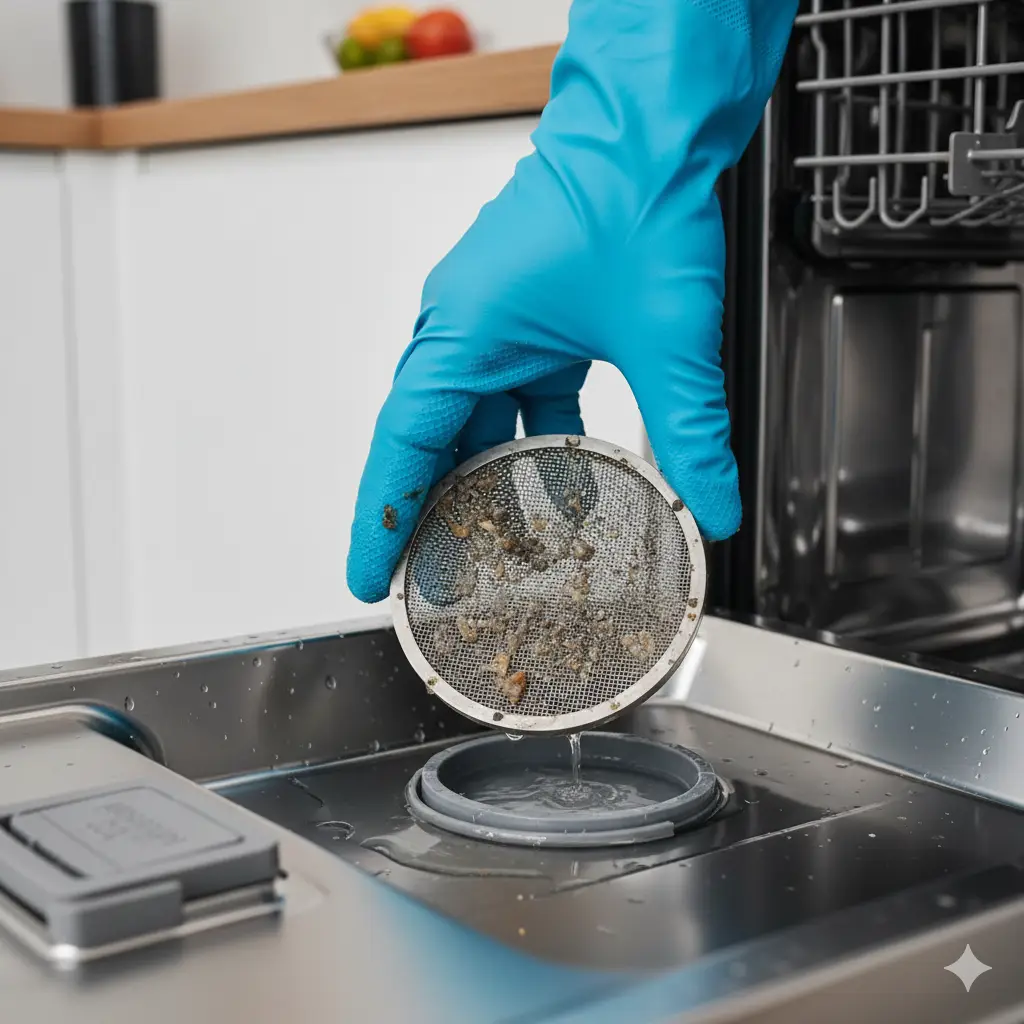
This is the #1 reason dishwashers stop draining. Modern dishwashers have filters to catch food, but if you haven’t cleaned yours in a month, it’s likely choked with “gunk.”
The DIY Fix:
- Pull out the bottom rack.
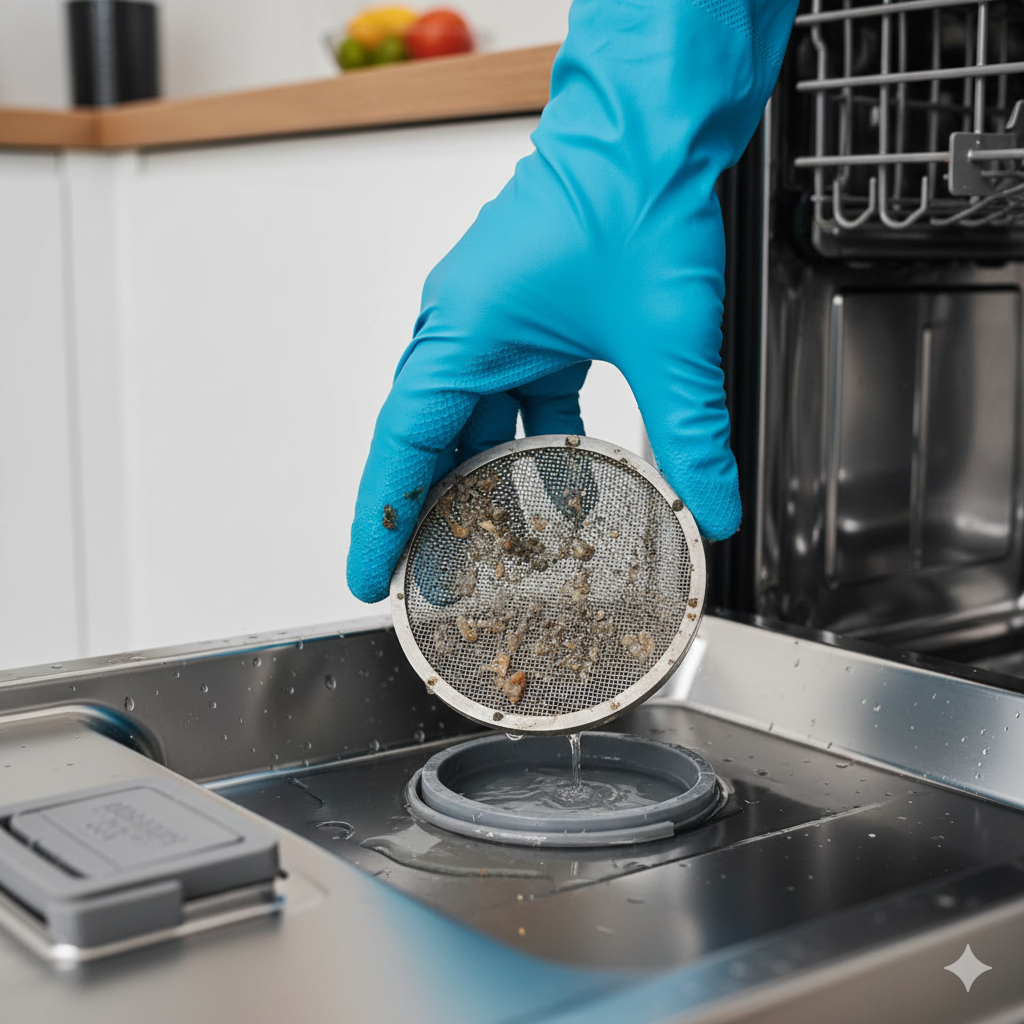
- Twist the cylindrical plastic filter (usually at the bottom center) and pull it out.
- Warning: It might smell. Scrub it in the sink with an old toothbrush and some dish soap.
- Reach into the hole where the filter was. Use a glove! I once found a broken wine glass shard here that was stopping the pump.
Step 2: Check the “High Loop” (The Under-Sink Secret)
If your filter is clean but you still have water, the problem is likely under your sink. Dishwashers drain through a hose into your garbage disposal or sink drain.
The DIY Fix:
- The Garbage Disposal: If you just installed a new disposal, there is a “knockout plug” inside the plastic tube where the dishwasher hose connects. If you didn’t knock that out with a screwdriver, the water has nowhere to go!
- The Kink: Look at the big plastic hose under the sink. If you recently pushed a heavy trash can or a box of detergent against it, it might be pinched shut. Straighten it out, and the water will flow.
Step 3: The Vinegar & Baking Soda Trick
If the water is draining slowly and smells like a swamp, you likely have a partial clog deep in the line.
The DIY Fix:
- Clear out all the standing water (use a cup and a sponge).
- Pour 1 cup of baking soda followed by 1 cup of white vinegar into the bottom.
- Let it fizz for 15 minutes.
- Run a “Heavy” cycle. This “volcano” reaction breaks up the grease that builds up from dirty plates.
When to Actually Call a Pro
If you’ve cleaned the filter, checked the hose, and the machine is making a loud growling or humming sound, your drain pump might be dead. Replacing a pump is a medium-level DIY task, but if you aren’t comfortable with wires, that is the time to call in the experts.
Leave a Reply